News
U18 Greater Boston Vipers Capture Mass State Hockey Championship Title
Tuesday, November 18, 2014, 9:43PM
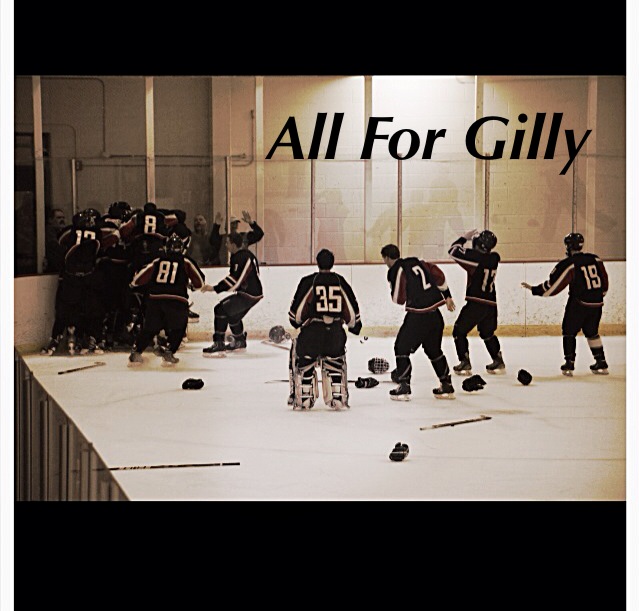
Congratulations winning the U18
Mass State Hockey Championship. This tournament recently took place
at NESC in Marlboro with a total ten qualifying teams participating in a very
competitive round robin format with the top four finalist moving on to single
game elimination. The Vipers went 3-0 in round robin play and qualified as a
high seed leading into the final rounds with some stellar individual
performances. Now facing a very talented team Quincy (CM players) in the
semi-finals, the Vipers battled to an extremely exciting intense overtime win
set up by Somerville and McGovern to a Ryan Smith stretch breakaway goal to
advance to the championship game against the Coastal Whalers (Barnstable High).
With the championship on the line, the Vipers made it
entertaining once again by going ahead by three goals early by (Spagnole, Smith
& Monagle). However, the Whalers refused to quit and fought their way back
by tying the game early in the third period and going ahead with 8 minutes
remaining. With an immediate adjustment to a stretch off side break-out system.
The Vipers capitalized with Mike McPherson receiving a loose puck on the wall
and burying a two on one five hole to tie the game with four minutes remaining.
Moving into sudden death overtime, the vipers players immediately recognized the
instability of the Whalers fatigued defense and applied an aggressive dump and
chase off side system to apply constant pressure. In doing so, Bernie McGovern
executed this practice perfectly with Andrew Somerville crashing to the net
splitting the defense and picking up the puck for the one timer shot and a 5-4
Championship victory.
- The Vipers will now be moving on to participate in the
National Championship series in Troy Michigan March 26th, 2015.
This weekend was a true testament of a group of young men
recognizing and finding the ultimate “Will To Win”. Each and every
player elevated their level of play and sacrificed themselves for the common
goal of TEAM! It was an amazing half season, these experiences are
once in a lifetime and the ultimate success can only be measured in the journey
as those memories will certainly last forever. Coach Somerville…
05E Win Gold in Placid / 18 TIER 1
Sunday, November 16, 2014, 10:33PM
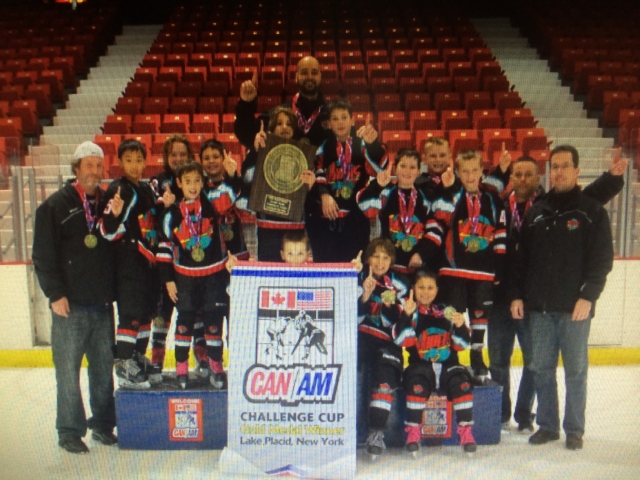
The 05E's won in OT in the Can/Am Championship Gold Medal game at Lake Placid today.
Congrats 05E's!
Story to follow.
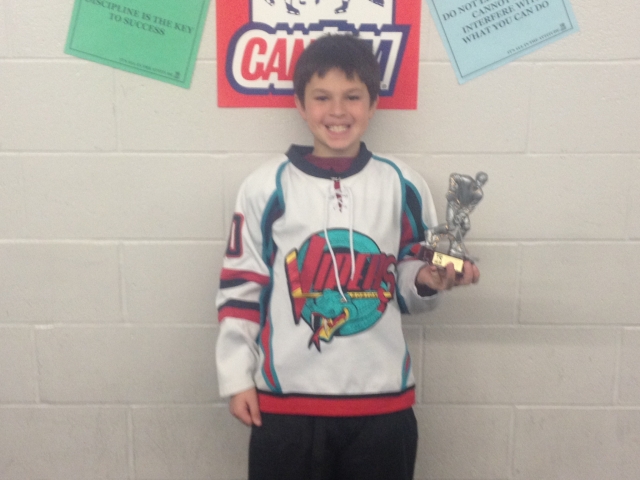
U18 Vipers WIN Mass State Title
Monday, November 10, 2014, 1:49AM
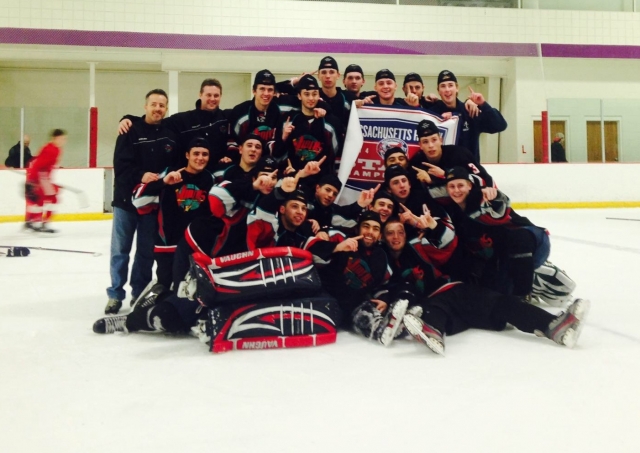
Congrats to the Vipers U18 Black team for winning the Massachusetts State Championship Tier II. A 4-3 overtme thriller with the game winner going to Andy Somerville........... Good Luck in Nationals
U18 Vipers are in State Finals.........
Sunday, November 9, 2014, 8:14PM

Playoffs
Championship Sunday
Sunday, November 9, 2014, 12:00PM

Good luck in the Semi Finals.........
Road to Nationals
Sunday, November 9
PLAYOFFS
| G | Time | Location | Away Team | Home Team | Status | ||
|---|---|---|---|---|---|---|---|
| 1 | 11:20a | NESC- Rink 1 | 18T2 Quincy 67's | 18T2 Greater Boston Vipers | Scheduled | ||
| 2 | 11:20a | NESC- Rink 2 | 18T2 Coastal Whalers | 18T2 South Shore Kings | Scheduled | ||
| 3 | 6:30p | NESC- Rink 2 | Winner of game 2 | Winner of game 1 | Scheduled |
U18 Vipers Qualify for States. Will play this weekend........
Wednesday, November 5, 2014, 12:25PM

Schedule can be fould at
Parent Appreciation Night
Friday, October 31, 2014, 8:13PM

The 5th annual Vipers Parent Appreciation Night at Kowloon Restaurant is scheduled for: Thursday, November 20th, 2014 @ 7:00pm.
Dinner and Entertainment will be provided by the Vipers. Cash Bar. Dinner will be served at 7pm which will be followed by a Comedy Show. This is an adult-only event.
All Vipers on-ice events have been rescheduled so that we can all have a night away from the rinks to relax and enjoy ourselves. This event is a lot of fun for the parents each year.
Please email your team coach/manager by (11/1) so that we can get a head count for each team.
RAFFLE/AUCTION ITEMS:
We are working with a 501(c)3 Charty again this year. There will be raffle items and a silent auction. If anyone has an item they would like to donate, it will be 100% tax deductible. You can email: vipers@vipersicehockey.com with specifics.
Thank you.
What separates the great players from the good players?
Friday, October 24, 2014, 10:09PM
Q: At the older and higher levels of hockey, what separates the great players from the good players?
A: As players get older and more physically mature, the physical skills like speed, strength and size become slightly less decisive than they were at younger ages because the discrepancy in those skills narrows among older players. So many of us who have coached at the older levels have learned over the years that hockey sense (the mental skill of the game) is what separates great from good as players progress through the 14U/16U ranks and beyond.
Decision-making skills are critical to be effective at higher levels of hockey. Size, speed and strength can be negated by great hockey sense. The understanding and awareness to make the right decisions with and without the puck is what really creates a special player.
What many of us have also learned is that it’s really difficult to teach the mental part of the game.
So how do you enhance a player’s hockey sense? I believe that cross-ice hockey at the younger ages helps do it.
Putting physically gifted young players in smaller spaces is important. It challenges them. It puts them in an environment that creates diverse decision-making situations repeatedly. Experiencing that kind of environment is really the only way to develop the mental skill.
And, as players get older, hockey in small spaces takes on a slightly different, but no less important role. It becomes all about putting the players in game-like situations as often as possible to simulate what will happen in a game. Nothing simulates these situations more frequently and competitively than small-area games. It’s an efficient tool for building hockey sense and stamina.
In my opinion, hockey sense could be the most important skill of all to insure long-lasting success in the game. And the development of that hockey sense starts early, through under-coaching at the lower levels and allowing young players to fail and be creative in both practice and games.
There are three key components to being an effective player: effort (how hard a player works and competes is extremely important), decision-making (mental skill/hockey sense) and execution (the physical skills of the game). All three are critical, but where we’re too often falling short is in providing the mental training and development for our players.
Give me a smart player over a really fast, big or strong player any day. Give me a player that has all three, and then you have a very special player.
Wanderlust is not the best trait of a quality goalkeeper
Thursday, October 23, 2014, 10:17PM
Early fall is ice hockey's second "silly season." The first is in the spring, immediately following the end of the actual hockey season. This is when parents start scrambling like mad to find the "right" select team for their young hockey player.
What they don't always understand is that nothing is guaranteed, even in youth hockey. The composition of the team you thought you were joining might well change - and change dramatically - by the time your child suits up in the fall. That can mean the addition of another goalie who will challenge your child for ice time. (Trust me, anyone who takes a "club" or "select" hockey official at his or her "word" is begging to be disappointed.)
And the fallout is all too predictable. Johnny (or Janey) isn't getting as much ice time and Mommy and Daddy think is appropriate. So they start playing "musical teams" with their child, looking for a better situation. I saw one glaring example of this in youth hockey, when a father (I'll call him "Joey") moved his son ("Billy") to four different teams over two years. Billy was a good kid, always cheerful and smiling, but he wasn't a very good goaltender. Pucks just found their way through him, constantly, regardless of how much additional instruction he got. But Joey kept insisting his child ought to be a starting goalie, which meant he had to keep changing jerseys.
And Billy went along with it, primarily (I'm guessing) because he didn't have a choice. Along the way, I'm convinced Billy actually started to believe what his father was preaching. Billy thought he was better than he was. Which, of course, almost always leads to disappointment. Which got me writing about the topic. Let me know what you think ...
##
Wanderlust is not the best trait of a quality keeper
The youth sports landscape has become increasingly complicated these days. Spring and summer have transformed into bizarre migration seasons for young athletes, where players and their parents move to a new school, a new team, or a new program in the hopes of finding a "better fit."
A better fit, of course, is parent-speak for "a place where my kid will get a fair shake, because he hasn't gotten one yet." I've seen this phenomenon happen at all ages. Many coaches have.
"Yeah, kids are jumping everywhere. If they don't like what's going on, they go somewhere else," Boston University legend Jack Parker told me once. "I will give you an example. When I was recruiting Tony Amonte (in 1987), he was a terrific player at Thayer Academy. He was 17 years old at the time, trying out for the Junior Olympic team. Now, they let him try out, because he was such a talent and they knew he was going to be on the junior team in the future. But there was no way he was going to make the junior team as a 17-year-old kid.
"But they let him try out, and there was a game on the South Shore, and they were playing a junior all-star team," said Parker. "Tony came out after the game with a long face on. His father said, 'What's wrong with you?' And Tony says 'What's wrong with me? I didn't play much. Didn't you watch the game?'
"And his father says, 'That's what's bothering you, Tony?'
"'Yeah, I didn't play enough.'
"'Well, Tony, let me ask you something. Do you want to play more?' And Tony says, 'Yeah, of course I want to play more.'
"And his father says, 'Then play better, Tony.' He didn't say 'The coaches are screwing you,' or 'You're way better than those other kids.' He just said 'Play better.' And that was it."
Youth hockey could use more parents like Mr. Amonte. Jump ahead 22 years, to June 2010, when a 39-year-old Tony Amonte was named the head coach at Thayer Academy. His athletic director, Matt McGuirk (Thayer, class of '92) knew things were going to be different when Amonte returned. Very different.
"When you and I were playing, there was one all-star team in town, and if you didn't make it, you played for your youth team," McGuirk told me three years ago. "Now, there's 55 all-star teams, a lot of for-profit organizations that will, quite frankly, tell you anything you want to hear if you're going to give them $5,000.
"What Tony represents is not so much a complete 180, but the bottom line is, there's no politics involved with his gig," said McGuirk. "You come out, you try out for the team. If you make the team, you're going to be an integral part of the team, whether you're a first-liner or a fourth-liner.
"Tony is all about the Old School meets the New School, and I think that's really important. In this age of enablement, this age that there's always another option, this age of materialism, Tony is all about getting to the core of it. You show up, you go to work, and you go home. The message is so important now, especially with kids today. If you want something bad enough, you can get it. Tony is of the school that you have to earn it. You've got to earn everything you get."
Amonte agreed with his former teammate, noting that the landscape, and its inherent wanderlust, has irrevocably changed, "not only high school hockey, but hockey in general. There are different forces pulling these kids everywhere. Keeping these kids in school is going to be a task, and I think it's going to be a task for every coach."
"It's tough," said Amonte, parsing his words carefully. "There's a lot of competition (for players) out there. There are tons of teams, and everyone wants to win."
As a result, the hockey landscape is filled with bedouin players, nomadic tribesmen roaming from rink to rink, program to program. And the situation is particularly applicable for goaltenders, for one obvious reason. While there can be 12 to 18 positional players per team getting ice time in any given game, there is usually just one goaltender. Most teams carry two or three goaltenders, but too many coaches, with their blinders firmly fastened on in their relentless drive for wins, will ride their No. 1 netminder upwards of 80-90 percent of the time. Sometimes every minute. Which, of course, can lead to disappointment and bruised feelings for the kids who aren't playing. And for Mom and Dad.
"Parents are part of the picture now," said McGuirk. "Being able to solve a problem by moving laterally rather than actually solving he problem through work ethic and determination, is more of the trend now. "
I've seen it firsthand. One glaring example comes to mind, a young man who I've coached since he first strapped on the pads at age six or seven. I've watched him grow, and become a very solid young netminder. Not spectacular, but solid. His freshman year, he attended a nearby prep school, but transferred to another for his sophomore year because his prospects of varsity playing time looked dim. After his junior year, a season in which he was the clear-cut starter, the young man was on the move again, leaving his prep school squad for a junior team. "We felt it was in his best interests," I heard, admittedly second-hand, from a "family adviser."
Really? I'd like to know just what those "best interests" are. I know it's a subjective term, but being the starting goaltender at a prep school with a good academic reputation seems like a pretty sweet arrangement to me. But junior teams offer more games, and supposedly more exposure, which supposedly equates to a better chance for a college scholarship or other opportunities. Clearly, going the prep school route didn't hurt Cory Schneider (Phillips Andover) and Rick DiPietro (St. Sebastian's School), but I recognize that they were exceptional talents. It has to be tougher for the middle-of-the-pack goaltender.
This is where character comes in. Developing character means learning to deal with adversity. And the best way to deal with adversity is to work harder. A determined work ethic is the gritty sandpaper needed to create an exquisite piece of furniture. It is the resolve that will sustain you as you get older, and life throws you curve ball after curve ball.
"That's the big dilemma. Do you take the kid with the heart, or the kid with the skill," said Amonte, when asked what is the greatest character trait he looks for in recruits. "I go for the heart every time. You can teach the skill, you can teach the systems, you can tell them where to be, but if they don't have the work ethnic, it's never going to be there.
"It's a learned skill too," he said. "Every day on the ice is a day you can get better. That's the way I look at it. You can try something new, you can try to get better, and do something you didn't do the day before."
Amen. You don't measure heart or work ethic by the miles that you've logged transferring between programs, or the number of teams you've played for. You measure it in effort you put in during practice and games, and in the weight room, off-season and in-season. As you start your season this fall, recommit yourself to that work ethic, and to your team.
FINIS